
Rural Production
Solar Power & Water Filtration
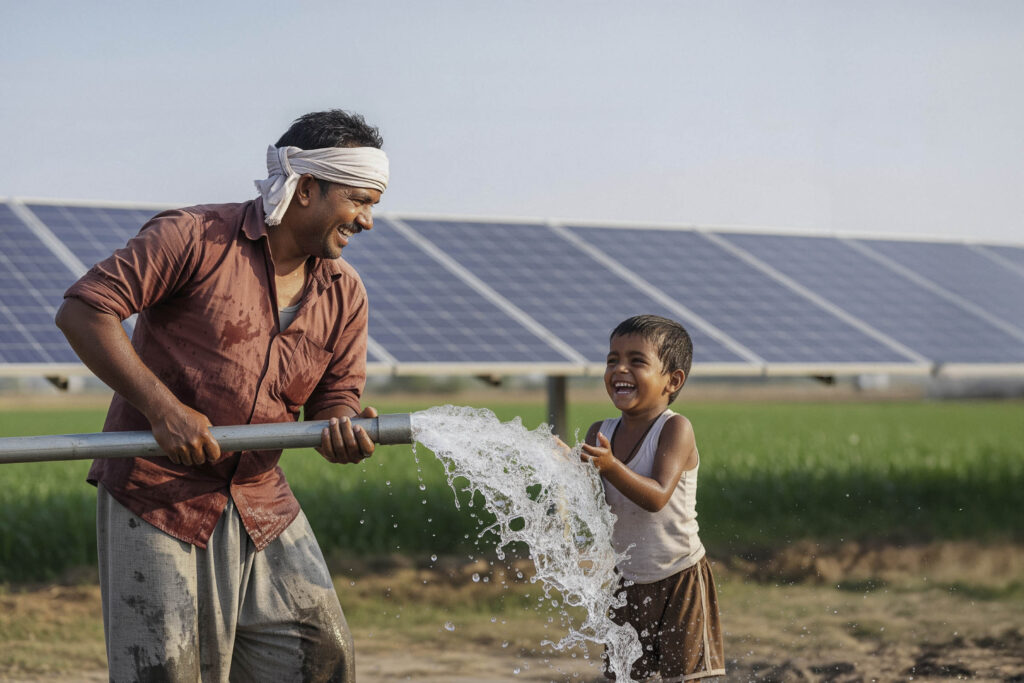
Solar Power
SOLAR POWER- Solar energy production in rural areas is transforming communities by providing clean, decentralized electricity for homes, agriculture, and businesses. Benefits include improved health and education, economic opportunities, and greater energy independence from fossil fuels. Solar can be implemented through individual home systems, community mini-grids, and even combined with agriculture in a practice known as agrivoltaics.
Benefits of solar energy in rural areas
- Energy independence and reliability: Solar provides a decentralized energy source, reducing reliance on an often-unreliable national grid and expensive, polluting fuels like kerosene or diesel.
- Economic opportunities: Solar-powered devices can support local businesses, and agrivoltaics can create new income streams through farming, as discussed in this article from UNDP Climate Promise.
- Improved quality of life: Access to electricity from solar power allows for proper lighting for children to study, enables businesses to operate after dark, and can power health clinics, leading to better health outcomes and overall living standards.
- Health and environmental benefits: Solar energy production reduces the need for polluting fuels like firewood and cow dung, which minimizes indoor air pollution and associated health problems.
- Cost savings: While initial installation can have a high upfront cost, solar panels become economical in the long run by eliminating the need to purchase expensive fossil fuels.
Implementation methods
- Solar home systems (SHS): These are individual systems for households that provide lighting and power for small appliances.
- Community mini-grids: These are larger solar installations that provide electricity to a whole village or a cluster of homes through a local grid, as seen in projects by Care India.
- Agrivoltaics: This involves co-locating solar panels and crops. Panels can be raised to allow for farming underneath, and some plants can be grown in the shade of the panels.
- Solar-powered irrigation: Solar pumps are being used to replace diesel
pumps, providing a cheaper and more efficient way to irrigate crops, especially in areas prone to drought.
Challenges and considerations
- High initial investment: The initial cost of solar systems can be a barrier for individual households and communities.
- Technological limitations: Research is still needed to develop solar technology specifically suited for agricultural use in different climates.
- Land use conflicts: Large-scale projects require careful planning to balance the needs of energy production with the need for agricultural land.
- Maintenance and operation: Regular maintenance, such as cleaning panels, is necessary to ensure optimal performance, especially in dusty environments.
Water Filtration
Water filtration production plant in a rural area can be a compact, modular system or a larger plant, depending on the population and water quality needs. Key considerations include the source of the water (groundwater or surface water), the necessary purification technologies (e.g., filtration, RO, UV, or chemical disinfection), the cost, and potential government programs that provide funding or support. The goal is to provide a reliable and safe water supply that meets specific standards.
Key components and considerations
- Plant type: For smaller or rapidly developing areas, compact and modular plants are efficient and can be installed quickly. For larger communities, a more traditional plant may be necessary.
- Water source: Determine if the water is from a surface source or groundwater, as this will influence the treatment needed.
- Purification technology: The specific technology will depend on the water & contaminants. Common methods include:
- Filtration: Basic filtration is often used, but more advanced systems like reverse osmosis (RO) may be needed to remove heavy metals like arsenic.
- UV and RO: RO+UV filters are recommended for water containing heavy metals.
- Chemical disinfection: Techniques like chlorination are used to kill microorganisms.
- Sedimentation and Coagulation: These are often part of a larger treatment process to remove suspended particles.
- Cost: The price varies widely depending on size, location, and technology chosen. A plant for 10,000 people could cost millions of dollars, while a small 8-10 KLD plant might cost a few lakh rupees.
- Government programs: In many regions, government initiatives can help fund and support the construction of these plants. For example, India’s Jal Jeevan Mission aims to provide potable tap water to all rural households.

Getting started
- Assess the need: Determine the population size to be served and the water qualityissues present.
- Select technology: Choose the appropriate filtration and purification methods based on the contaminants identified in the water.
- Plan for funding: Explore government programs and other financial assistance options.
- Implement and monitor: Build the plant using the chosen technology and ensure ongoing monitoring to maintain water quality standards.